Why Solar Energy is the Future (and fossil fuels are the past)
We need to talk about energy. Not in a boring, technical way, but in a “this affects everything about your life” way. Because here’s the truth: we’re living through one of the biggest energy transitions in human history, and most people are still sleeping on it.
Solar energy isn’t just “good for the environment” anymore. It’s not just something hippies talk about at farmers’ markets. Solar has become the most practical, economical, and logical choice for powering our world. And if you’re still skeptical, buckle up, because I’m about to change your mind.
The Cost Revolution Nobody Saw Coming
Let’s start with money, because that’s what most people actually care about. In 2010, installing solar panels was expensive. Like, really expensive. It was something only wealthy homeowners or forward-thinking corporations could afford. The cost per watt of solar power was high enough that it seemed like solar would always be a niche, boutique energy source.
Then something incredible happened. Solar costs didn’t just decrease—they collapsed. We’re talking about an 85% reduction in costs over the last 15 years. That’s not a typo. The price of solar has fallen faster than almost any technology in human history. It’s fallen faster than computers, faster than smartphones, faster than flat-screen TVs.
What does this mean in practical terms? It means that in most parts of the world, building a new solar farm is now cheaper than building a new coal plant, a new natural gas plant, or even a new nuclear plant. But here’s the really wild part: in many places, new solar is now cheaper than just continuing to operate existing coal plants. Think about that. It’s literally cheaper to abandon a coal plant that’s already built and paid for, and build solar from scratch.
This isn’t some future prediction. This is happening right now. In 2024, solar became the fastest-growing source of electricity generation worldwide. Not because of subsidies or mandates, but because it makes financial sense. When you can generate power more cheaply with solar than with fossil fuels, the choice becomes obvious.
And the trend isn’t slowing down. Every year, solar technology gets more efficient. Manufacturing processes improve. Economies of scale kick in harder. The cost curve keeps going down. By 2030, experts predict solar will be so cheap that it will fundamentally reshape how we think about energy economics.
The Environmental Case That Actually Matters
Okay, let’s address the elephant in the room: climate change. I know, I know, you’ve heard it all before. But let me frame this differently.
A coal plant is basically a continuous explosion happening 24/7. You’re burning ancient compressed plants, creating massive amounts of heat, and releasing all that carbon back into the atmosphere. Every single day, every single hour, pumping out CO2, sulfur dioxide, nitrogen oxides, mercury, and particulate matter. It’s not just bad for the climate—it’s bad for the air you breathe right now.
Natural gas is “cleaner” than coal, sure. But it’s still combustion. Still emissions. Still contributing to the warming of our planet. And let’s not even get started on the methane leaks that happen during extraction and transport. Methane is 80 times more potent than CO2 as a greenhouse gas over a 20-year period.
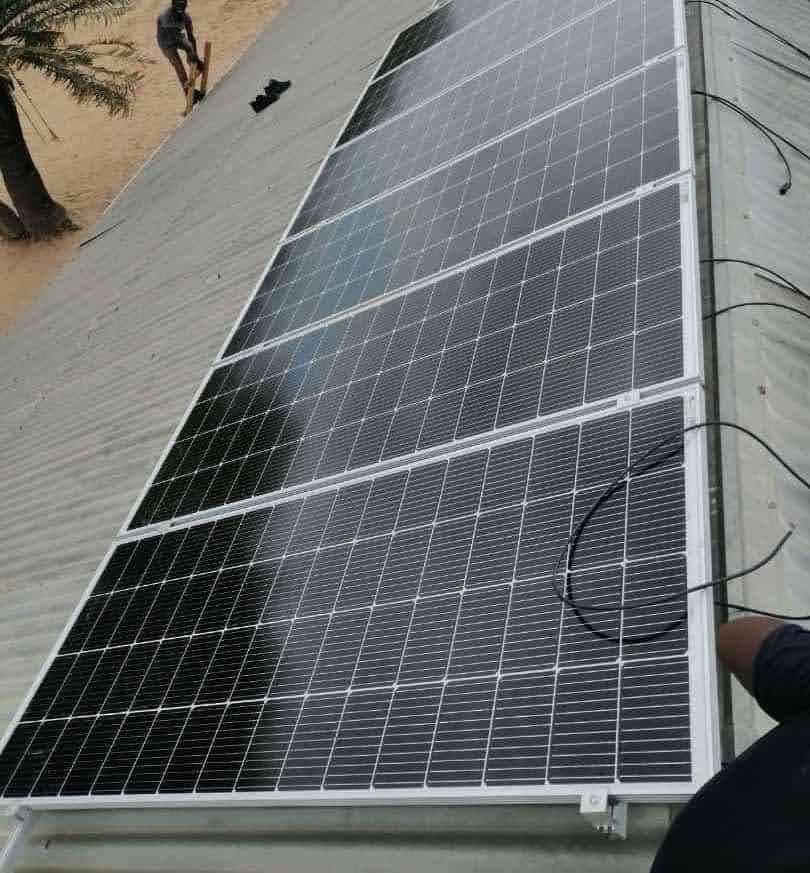
Now think about a solar panel. It just sits there. Silent. No combustion. No emissions. No waste products. Just photons hitting silicon and creating electron flow. That’s it. Once it’s manufactured and installed, it produces clean electricity for 25 to 30 years with essentially zero environmental impact during operation.
The air quality difference alone is staggering. Cities that transition away from fossil fuel power plants see immediate improvements in respiratory health, childhood asthma rates, and overall life expectancy. We’re not talking about abstract future benefits—we’re talking about kids being able to breathe easier today.
And yes, manufacturing solar panels requires energy and resources. Critics love to point this out. But here’s the thing: a solar panel typically pays back the energy used to manufacture it within 1 to 2 years. Then it keeps producing clean energy for another 25+ years. The math isn’t even close.
The Abundance Mindset
Here’s a mind-blowing fact: the sun delivers more energy to Earth in one hour than all of humanity uses in an entire year. Read that again. One hour of sunlight equals one year of human energy consumption.
We are literally bathed in more energy than we could ever use. It’s falling on our heads for free, every single day. And we’ve spent the last century digging up dead dinosaurs and ancient plants from underground instead of just capturing what’s raining down on us constantly.
Fossil fuels are, by definition, finite. There’s a limited amount of oil in the ground. A limited amount of coal. A limited amount of natural gas. We can debate how much is left, but everyone agrees there’s an endpoint. We’re fighting wars over these resources. Countries rise and fall based on their access to them. Entire economies are held hostage by whoever controls the wells and pipelines.
Solar energy is functionally infinite. The sun is going to keep shining for another 5 billion years. We’re not going to run out. There’s no OPEC for sunlight. No dictator can control access to it. No war can cut off the supply.
This fundamentally changes the geopolitics of energy. Imagine a world where every country, every community, every building can generate its own power. Where energy security isn’t about controlling resources halfway around the world, but about putting panels on your own roof.
Energy Independence Is Real
Let’s talk about what energy independence actually means. Right now, for most people, electricity comes from somewhere else. A power plant miles away, maybe hundreds of miles away. Fuel that was extracted from the ground in another state or another country entirely. Your power bill is subject to global commodity prices, geopolitical tensions, and supply chain disruptions.
With solar, you can generate power right where you use it. Your roof becomes your power plant. Your parking lot. Your backyard. The economics of this are revolutionary.
For homeowners, this means protection from rising electricity rates. It means power during grid outages if you have battery storage. It means your home generates value instead of just consuming resources.

For businesses, it means predictable energy costs. When you install solar, you know what your electricity will cost for the next 25 years. Try getting that certainty from your utility company.
For developing countries, this is even more transformative. Instead of building expensive centralized power plants and massive transmission infrastructure, communities can install distributed solar systems. Villages that never had reliable electricity can suddenly have power. Schools, clinics, and homes can light up without waiting for their government to extend the grid.
The Operating Cost Advantage
Once a solar panel is installed, the ongoing costs are minimal. You’re not buying fuel. You’re not dealing with combustion equipment that needs constant maintenance. You’re not managing waste disposal. You’re not dealing with the complex machinery of a conventional power plant.
The sun’s energy is free. It doesn’t have a price that fluctuates with global markets. It doesn’t need to be extracted, refined, transported, and burned. It just shows up, every day, and your panels convert it to electricity.
Compare this to a natural gas plant. You need a constant supply of gas. You need pipelines or trucks delivering fuel. You need to manage combustion equipment, heat exchangers, turbines, and generators. You need to deal with emissions controls. You need staff monitoring everything 24/7.
Solar panels require occasional cleaning and very infrequent maintenance. Modern panels are incredibly reliable. They have no moving parts. Nothing to break down. Just solid-state physics doing its thing.
The total lifetime cost of solar—installation plus maintenance divided by total energy produced—has become unbeatable. This is why utilities themselves are building massive solar farms. Not because they’re environmentally conscious (though some are), but because it’s the cheapest way to add new generating capacity.
The Technology Keeps Improving
Here’s what makes solar different from fossil fuels: the technology is still rapidly evolving. Every year, panels get more efficient. They convert more sunlight into electricity. They last longer. They cost less to manufacture.
Perovskite solar cells are on the horizon, promising even higher efficiencies at lower costs. Bifacial panels capture light from both sides. Tracking systems follow the sun across the sky for maximum output. Battery storage technology is advancing rapidly, solving the intermittency challenge.
With fossil fuels, we’ve basically maxed out the technology. A coal plant or gas turbine today isn’t fundamentally different from one built 20 years ago. The efficiency gains are marginal. There’s no Moore’s Law for coal.
But solar is still on an exponential improvement curve. We’re nowhere near the theoretical limits of solar efficiency. This means the advantages of solar will only grow stronger over time.
The Intermittency Problem Is Solving Itself
Critics love to point out that solar doesn’t work at night. True. And it produces less power on cloudy days. Also true. This has been the main argument against solar for decades.
But here’s what’s changed: battery storage costs have dropped by 90% since 2010. Grid-scale batteries are now economically viable. Home battery systems are becoming common. We’re building systems that store excess solar energy during the day and release it at night.
And it’s not just batteries. Pumped hydro storage, compressed air storage, green hydrogen—multiple technologies are emerging to store renewable energy. The intermittency problem is rapidly becoming a solved problem.
Plus, solar pairs beautifully with wind power. When the sun isn’t shining, the wind is often blowing. Build a mix of renewable sources across a large enough area, and you have remarkably consistent power generation.
The Jobs and Economic Growth
The solar industry is creating jobs faster than almost any other sector. Installation technicians, electrical engineers, manufacturing workers, sales professionals, researchers—the solar boom is employing hundreds of thousands of people and the numbers keep growing.
These aren’t jobs that can be outsourced. You can’t install solar panels remotely. You can’t maintain solar farms from another country. These are local jobs, community jobs, jobs that build skills and create careers.
Compare this to fossil fuel industries, which are increasingly automated and declining. Coal mining employment has been falling for decades. As solar grows, it’s creating more opportunities than it’s displacing.
The Bottom Line
Solar isn’t the future anymore. Solar is the present. It’s the most economical choice. It’s the most environmentally sound choice. It’s the most secure choice. It’s the choice that makes sense from every angle—financial, environmental, practical, and strategic.
The transition is happening whether people believe in climate change or not, whether they care about the environment or not, because ultimately, economics wins. And solar economics are now undeniable.
The sun rises every morning with more power than we could ever use. We finally have the technology to harness it efficiently and affordably. The question isn’t whether we’ll transition to solar—it’s how fast we’ll get there.
The smart money is already moving. The smart countries are already building. The smart homeowners are already installing.
The future is solar. The math isn’t mathing for fossil fuels anymore. We’re just watching everyone figure it out, one installation at a time.